
South South Nigeria, also known as the Niger Delta, is one of the six geopolitical zones in Nigeria. It is located in the southern part of the country.
The region shares boundaries with the Gulf of Guinea (Atlantic Ocean) to the south, lies between the South East and South West geopolitical zones, and is bordered by the North Central zone to the north.
| South South States in Nigeria |
|---|
| 1. Akwa Ibom 2. Bayelsa 3. Cross River 4. Delta 5. Edo 6. Rivers |
The South South geopolitical zone was formally created in 1997 during the military administration of General Sani Abacha, following the restructuring of Nigeria’s political and administrative regions. It was formed from parts of the former Eastern and Western regions, grouping together states with similar geographical features and cultural backgrounds.
This guide presents a comprehensive list of the states that make up South South Nigeria. It also explores the major ethnic groups, climate, and cultural practices of the people. In addition, it highlights the region’s economy, popular local foods, and top tourist attractions worth visiting.
List of South South states in Nigeria
Let’s take a glance of each of the state and other relevant details.
| State | Capital | Land Area (km²) | Date Created | Population (2006 Census) | Primary Postal Code | Slogan / Nickname |
| Akwa Ibom | Uyo | ~7,081 | 23 Sep 1987 | ~3,902,051 | 520001 | Land of Promise |
| Bayelsa | Yenagoa | ~10,773 | 1 Oct 1996 | ~1,704,515 | 561001 | Glory of All Lands |
| Cross River | Calabar | ~20,156 | 27 May 1967 | ~2,882,988 | 540001 | The People’s Paradise |
| Delta | Asaba | ~17,698 | 27 Aug 1991 | 4,112,445 | 320001 | The Big Heart |
| Edo | Benin City | ~19,559 | 27 Aug 1991 | ~3,233,366 | 300001 | Heartbeat of The Nation |
| Rivers | Port Harcourt | ~11,077 | 27 May 1967 | 5,198,716 | 500001 | Treasure Base of the Nation |
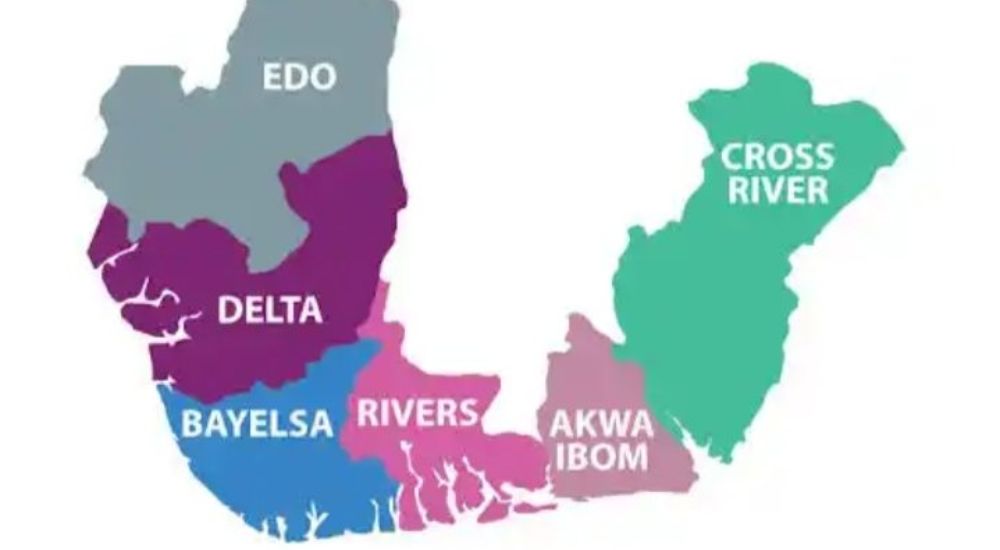
About South South Nigeria States
South South Nigeria occupies a total land area of approximately 84,616 square kilometres. Among the six states in the region, Cross River State has the largest land mass, while Akwa Ibom State has the smallest land area. The table above shows the land area of each state for easy comparison.
The South–South geopolitical zone consists of 123 local government areas (LGAs), which is fewer than the number of LGAs in South-West Nigeria. According to the 2006 national census, the population of South–South Nigeria was estimated at 21,030,765. Rivers State had the highest population, while Bayelsa State was the least populated.
Ethnic Groups
The indigenous people of South–South Nigeria belong to diverse ethnic groups. The region is home to many languages and cultures, including Annang, Efik, Edo, Esan, Ibibio, Igbo, Ijaw, Isoko, Itsekiri, Oron, and Urhobo, among others.
Climate
South–South Nigeria experiences two main climatic seasons: the wet season and the dry season. Both seasons fall under the tropical monsoon climate. Due to the region’s proximity to the Atlantic Ocean, rainfall occurs for most of the year. The rainy season usually begins around April and lasts until November.
Rainfall is heaviest between July and September, with annual rainfall reaching up to 2,000 mm in some areas. Humidity levels are generally high during the wet season, especially in June.
The dry season is relatively short, starting in November and ending around March. However, occasional rainfall may still occur during this period. The average monthly temperature in southern Nigeria ranges between 23°C and 31°C, resulting in warm weather throughout the year.
Culture & Traditions
Culture is often described as the way of life of a people within a defined community, and this description strongly reflects the rich heritage of the Niger Delta region. Across the South–South states, diverse cultural traditions thrive.
Edo State, in particular, preserves the legacy of the ancient Benin Kingdom, one of Africa’s most powerful pre-colonial empires. Cultural expressions such as the Igue Festival and the distinctive royal coral bead attire offer a glimpse into the enduring traditions of this historic state.
In Delta State, several ethnic groups including the Urhobo, Itsekiri, and Ijaw contribute to the region’s cultural diversity. Each group maintains its own traditional music, dance styles, customs, and local language.
Similarly, Akwa Ibom and Cross River States are home to the Ibibio and Efik people, who are widely known for their rich storytelling traditions, vibrant attire, and captivating traditional dances. Iconic cultural displays such as the Ekpe masquerade are particularly memorable and remain an important symbol of the region’s cultural identity.
Economy
The South–South states of Nigeria play a central role in the nation’s economy, particularly in oil and gas production, contributing significantly to Nigeria’s Gross Domestic Product (GDP).
- Rivers, Bayelsa, and Delta States form the backbone of Nigeria’s petroleum industry, hosting major oil fields, refineries, and the operations of several multinational oil companies.
- Oloibiri, a historic town in Bayelsa State, is recognized as the birthplace of Nigeria’s oil industry. It was here that Nigeria’s first commercial oil well was discovered in 1956.
- Beyond oil, Edo State has a long history of economic activity. Through the ancient Benin Kingdom, the area engaged in international trade as early as the 15th century, particularly with Portuguese merchants.
Local Foods in South South Nigeria
If you’re among those who love food with bold flavors, this region will feel like home while enjoying the taste of South South Nigeria delicacies:
- Fisherman Soup (Bayelsa): A spicy seafood stew, often loaded with fish, crabs, and prawns. Perfect with swallow or white rice.
- Banga Soup (Delta): Made from palm nut extract, it is rich, aromatic, and typically served with starch.
- Owo Soup (Delta): A smoky-flavored soup made with palm oil and potash, usually eaten with boiled yam or plantain.
- Afang & Editan (Akwa Ibom/Cross River): Leafy vegetable soups thickened with periwinkles and goat meat.
- Ekpang Nkukwo: A delicacy made with grated cocoyam wrapped in leafy greens, flavored with crayfish and local spices.
Pro Tip: Most of these dishes taste even better when cooked over firewood. The smoky depth adds a magical layer of flavor.
Top Places to Visit
Each state in South–South Nigeria offers unique experiences for travelers, ranging from eco-tourism to rich cultural heritage. To begin your tour:
- Cross River State
A visit to Cross River State is incomplete without exploring the Obudu Mountain Resort, a serene highland destination known for its cool climate and cable car that provides breathtaking views of the surrounding landscape.
Other notable attractions include Kwa Falls and Agbokim Waterfalls, which are ideal for nature lovers and adventure seekers. Visitors can also experience the famous Calabar Carnival, often described as Africa’s biggest street party. It features vibrant costumes, music, and dance and is held annually in December.
- Rivers State
In Rivers State, Bonny Island offers a peaceful coastal environment with deep historical ties to trade and Nigeria’s oil industry, making it a popular tourist destination. Isaac Boro Park, located in Port Harcourt, is another recreational spot dedicated to the memory of Niger Delta activist Isaac Adaka Boro.
Additionally, the Port Harcourt Tourist Beach provides a lively atmosphere for relaxation, local culture, and leisure activities.
- Bayelsa State
The Oloibiri Oil Museum in Bayelsa State marks the site of Nigeria’s first commercial oil discovery and is a must-visit for history enthusiasts.
Other attractions include Nembe and the Brass River, which offer calm boat rides through mangrove-lined creeks and showcase the natural beauty of the Niger Delta.
- Edo State
In Edo State, the Oba of Benin’s Palace stands as a significant royal heritage site that remains active to this day. Another remarkable landmark is the Benin Moat, one of the longest earthworks in the world, symbolizing the ancient defensive systems of the Benin Kingdom.
For lovers of art and history, the National Museum, Benin City, is a must-see destination, housing valuable artifacts from the Benin Kingdom.
FAQ’s
Where is South–South Nigeria located?
- It is located in the southern part of Nigeria, approximately around latitude 5° North and longitude 6° East.
How many states are in South–South Nigeria?
- There are six states: Akwa Ibom, Bayelsa, Cross River, Delta, Edo, and Rivers.
What is another name for South–South Nigeria?
- The region is commonly referred to as the Niger Delta.
Summary
Whether you are a Nigerian seeking to reconnect with your roots, a traveler in search of new adventures or a foodie exploring diverse local cuisines, South–South Nigeria has something to offer. It is a region where tradition is lived daily, history remains visible, and the rich flavors of local dishes can leave a lasting impression.
Leave a Reply